
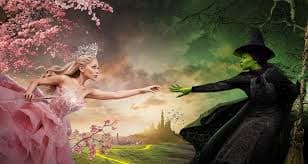
It's that time of year again when people are painting themselves green and walking down the yellow brick road to see Wicked. Regardless of your thoughts on Wicked, it is undeniable that it has been present in all of our lives this past year.
The first Wicked: For Good marketing I noticed was their collaboration with Dunkin' Donuts. Then I saw a new R.E.M. eyeshadow palette, next thing I knew I was seeing Wicked Owalas, Puma shoes, even chess sets! Though the marketing has been less notable than last year’s Wicked frenzy, it has still been excessive. Curiously, this trend is catching, but to what end?
This past Thanksgiving, families savoured their turkey to the visuals of the fifth Stranger Things season. While doing so, they might have accompanied their gravy with Stranger Things Doritos or made a Stranger Things Chips Ahoy pie. It seems Netflix followed a certain green witch’s tactics when it comes to marketing. In fact, in the last three weeks, I can’t think of an ad that did not take place in the upside-down. From Target to T Mobil, every marketing executive took us to Hawkins, Indiana.
All of which drives the question, is this necessary? Last year, I argued that this marketing would only cheapen Wicked and hurt its Oscar possibilities, which was a truthful prediction. However, what seemed to succeed from this marketing was people’s view of the movie. This year, there has been a shift, though die-hard Wicked fans bawled their eyes out to For Good and bought Wicked crocs. The reviews have been less kind than last year. In fact, social media, which hyped up the first instalment of Wicked, has turned its back on Oz. From critiques of the makeup on Jonathan Bailey, to the scrutiny of the brand new songs, the public perception of Wicked: For Good has been less than kind. Which leads me to again beg the question, what is the point? This excessive marketing not only does not bode well with awards but has done little to create a positive perception of the new film. In fact, this past weekend, Zootopia 2 showed us how a sequel of an unremarkable movie can manage to captivate audiences without much need for merchandise. Furthermore, with this being the last Wicked installation (excluding the inevitable spin-offs), there is no need to keep us excited for the next movie through merchandise, as there was last year. This also means there is no way to repurpose the unsold merchandise, making this a wasteful pursuit as well. Which leads to the inevitable and somewhat obvious answer: money.
Now, why would I take you on this long-winded journey just to tell you the answer was within your ruby slippers all along? Well, because this conclusion directly contradicts Wicked’s message. Spoiler warning! As Wicked For Good concludes our story, we see how our heroine, Elphaba, overpowers an all-powerful, greedy ruler who uses propaganda to control his people. Yet here is Jon M Chu doing exactly that, using ads and merchandise to woo us into adoring Wicked. It seems Chu fundamentally misunderstood the musical he was adapting. If we should be buying makeup, Crocs or chess sets of anyone, it should be the Wizard, not Elphaba or Glinda, it goes directly against what they stand for.
Which leads me to reiterate the conclusion I reached last year, Universal does not want us to watch Wicked, they want us to buy it, they don’t care if it wins an Oscar, they want us to buy that Wicked Honda, what they want is their own Emerald City built on the American dollar.