
As the earth warms, waters rise and our subways flood, it is easy to feel hopeless against climate change. The world is so divided, such a global issue feels impossible to solve. Yet, the world has worked together before, on the Montreal Protocol.
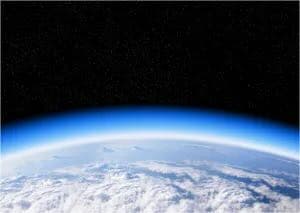
Encompassing our entire world is the Ozone Layer, a large part of our atmosphere. This shield, named for its high ozone concentration, protects us from the sun by absorbing most of the sun’s ultraviolet radiation. The chemical ozone is naturally created when UV and oxygen interact, both of which the Earth has in abundance. However, in the early 1980s, scientists noticed that a massive hole was developing in the Ozone Layer.
It is important to note that this hole is not a “real” hole, rather, the amount of Ozone had dramatically thinned over Antarctica, reducing the amount of UV radiation protection in that area, thus creating the atmospheric hole. This hole was steadily growing, something extremely dangerous. Without the Ozone Layer, the earth would rapidly heat up and radiation levels would drastically increase. From mass cancer to massive draughts to dying ecosystems, life on earth might not survive.
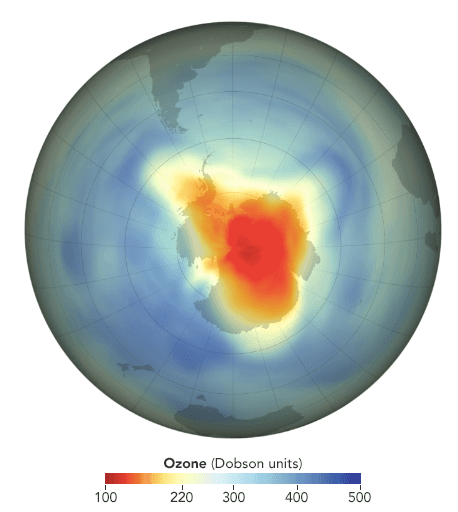
After scientists in the 1970s realized that this hole was forming, research was conducted to find the root cause, which was determined to be a group of chemicals called chlorofluorocarbons (CFCs). CFCs are used often in everyday life; they have been used as refrigerants, propellants (in aerosol applications), gaseous fire suppression systems, and solvents. The increased commonplace usage of the CFCs led to the creation of a treaty called the Montreal Protocol.
The Montreal Protocol on Substances That Deplete the Ozone Layer, or the Montreal Protocol, is a UN treaty motioning to phase out and abolish the use of chemicals, such as CFCs, that deplete the Ozone Layer. Signed in 1987, it was ratified by 197 parties, making it the first globally ratified UN treaty. Since its creation, the Protocol has been amended 6 times, adding more chemicals to the list of phased out chemicals. The Ozone Layer was predicted to heal fully around the year 2066, and with the changes installed by the Montreal Protocol, the world is currently on track to meet that date.
Though the climate crisis worsens, the Montreal Protocol is a beacon of hope and a precedent to be followed, demonstrating that the world can come together to save our planet. Legislation and restriction on harmful materials is possible, we’ve done it before and we can do it again.